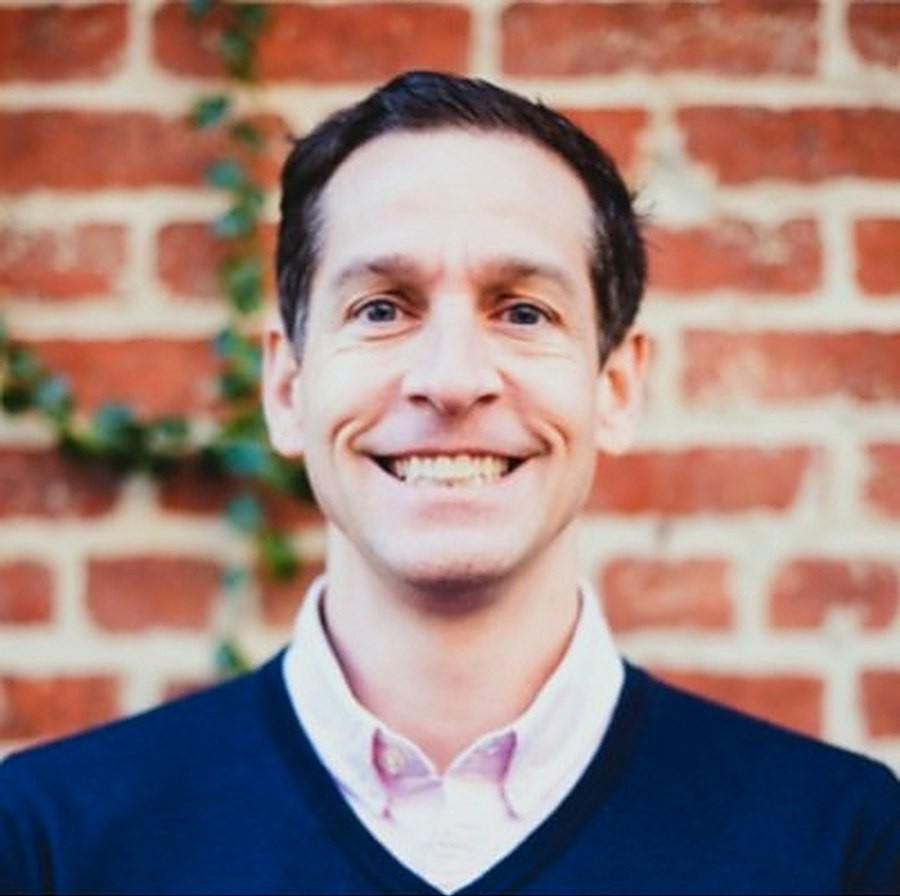
A global thought leader and subject matter expert in law enforcement, intelligence, transnational organized crime, and drug policy — with over 12 years of service at the U.S. Drug Enforcement Administration and a distinguished record of public service, academic scholarship, and policy advocacy.


Jim Crotty is a recognized subject matter expert in law enforcement, intelligence, transnational organized crime, and drug policy. He currently serves as Law Enforcement Outreach Manager at Meta Platforms, Inc., where he develops and maintains strategic relationships with law enforcement agencies across North America to help combat online criminal activity and prevent real-world harm.
Before joining Meta, Jim led the Investigative Support Section at the DC Metropolitan Police Department (MPD), managing a team of Criminal Research Specialists providing real-time intelligence on major crimes across the District of Columbia. He also served as Associate Vice President at The Cohen Group, a strategic advisory firm founded by former Secretary of Defense William Cohen, where he led client teams across defense, cybersecurity, healthcare, energy, and national security.
Jim’s distinguished public service career includes over 12 years with the U.S. Drug Enforcement Administration (DEA), serving in strategic, tactical, and operational positions domestically and internationally. His final DEA assignment was as Deputy Chief of Staff and Executive Assistant to the Administrator — the agency’s top leadership position.
He is an Adjunct Professor at American University’s School of Public Affairs, teaching courses on Drugs, Crime, and Public Policy. His commentary and analysis have been featured in the Washington Post, Wall Street Journal, Newsweek, The Hill, STAT News, The Guardian, and many other leading publications.
Develops and maintains strategic relationships with law enforcement agencies across North America to help combat online criminal activity and prevent real-world harm.
Teaches JLC-451: Drugs, Crime & Public Policy and JLC-313: Organized Crime in the Department of Justice, Law & Criminology.
Led a team of Criminal Research Specialists providing real-time intelligence on major crimes across the District of Columbia.
Led multiple client teams across defense, cybersecurity, healthcare, energy, and national security sectors at the strategic advisory firm founded by former Secretary of Defense William Cohen.
Over 12 years of distinguished service. Final role: Deputy Chief of Staff and Executive Assistant to the Administrator. Prior roles included Group Supervisor (Chicago Field Division), Liaison Officer (London Country Office, 2013–2018), Tactical Intelligence Analyst with FAST-Alpha (Afghanistan, 2010), and Strategic Intelligence Analyst focused on South America.
Provided strategic and operational advice to clients in the Intelligence Community, Department of Homeland Security, and Department of Defense.
Written with Madeline Hilliard. Argues that the decline in overdose deaths masks a record rise in nonfatal overdoses — evidence that the crisis is shifting shape rather than ending, and that fewer deaths should not be mistaken for success.
Read on The Hill →A peer-reviewed analysis of the recent sharp decline in U.S. overdose deaths, examining what the drop reveals about the role of drug supply in driving the crisis — and what it means for policy going forward.
Read in the International Journal of Drug Policy →Argues that despite the dominance of synthetic drugs, plant-based substances like cocaine and cannabis are quietly regaining market share, driven by the economics of the illicit drug trade.
Read on The Hill →Analyzes the Trump administration’s use of military renditions to extradite cartel leaders, questioning whether this controversial tactic can meaningfully reduce drug trafficking into the U.S.
Read on Small Wars Journal →Explores the provocative idea of pharmaceutical companies producing regulated recreational drugs as an alternative to dangerous illicit substances, weighing public health benefits against regulatory and moral risks.
Read on STAT News →Makes the case for formally designating major drug cartels as national security threats, arguing that their power, violence, and geopolitical reach demand a military-grade strategic response.
Read on Small Wars Journal →Contends that the explosion of synthetic drugs is driven by market economics — low production costs and high profit margins — not the failure of prohibition, requiring economic rather than purely punitive policy responses.
Read on The Hill →Warns that tightening border enforcement and tariffs on Mexico could incentivize drug trafficking organizations to shift synthetic drug manufacturing operations to within the United States.
Read on Small Wars Journal →Cautions against complacency as overdose death numbers decline, arguing that the underlying structural drivers of the drug crisis — including supply chains and addiction — remain largely unaddressed.
Read on The Hill →Jim Crotty, former DEA Deputy Chief of Staff, weighs in on the proliferation of Narcan vending machines as a harm-reduction strategy, arguing that while keeping people alive is important, the ultimate goal must be ending drug use.
“We should be carpet-bombing the country with Narcan. But the goal can’t simply be to keep people alive — the goal has to be to stop doing drugs.”Watch on Fox News →
Jim Crotty appears as a featured expert in this Scripps News documentary on the fentanyl crisis, tracing the origins of the epidemic from prescription drug over-marketing through the heroin wave to the current synthetic drug catastrophe.
“The drug trade is a profit-driven enterprise. The lethality of fentanyl is a calculated risk for dealers — and that’s what makes it so dangerous.”Watch the documentary →
“We’re seeing this decrease in overdose deaths and everyone’s still trying to suss out exactly why. I don’t think now is the time that we want to stop any of those existing efforts because we know that at least some, or a combination of them, have been working.”The Guardian — “Trump policies could fuel illicit drug trade despite vow to curb fentanyl” · March 8, 2025 · By Hannah Harris Green. Crotty criticized Trump’s tariffs on Mexico, Canada, and China as ‘coercive,’ warning they could disrupt existing anti-drug efforts and undermine intelligence-sharing partnerships.
“If it were an athlete, people would call it ‘The G.O.A.T.’ It is in fact the most pernicious, the most devastating drug that we have ever seen.”Wall Street Journal — “How Two Mexican Drug Cartels Came to Dominate America’s Fentanyl Supply” · August 30, 2022 · By Jon Kamp, José de Córdoba & Julie Wernau
“The goal can’t simply be to keep people alive. If you believe, like me, that doing drugs is very destructive, then the goal has to be to stop doing drugs.”Associated Press — “A look inside the 1st official ‘safe injection sites’ in US” · March 9, 2022 · By Jennifer Peltz
“Potential exposure to these substances is still quite small, thank goodness. When you use hyperbole, you can actually lose the audience and the message.”STAT News — “Fentanyl busts saved 258 million lives? Experts say that’s implausible” · May 7, 2025 · By Lev Facher. Crotty pushed back on Attorney General Pam Bondi’s claim that Trump-era drug busts saved 258 million lives.

Bipartisan non-profit focused on ending the U.S. opioid crisis.
National nonprofit working to prevent drug overdose deaths through naloxone access, education, and community training.

Student-led overdose-prevention nonprofit bringing harm-reduction education to college campuses; faculty advisor through American University.

International network of researchers and practitioners addressing organized crime.
University of South Florida research institute on national security.
Leading journal on irregular warfare and national security strategy.

Supported Organized Crime and Grand Corruption team on drug trafficking and money laundering.

Prestigious U.S. government leadership development program.

International network of scholars and practitioners dedicated to rigorous, evidence-based drug policy research.